What Is Radon?
Radon is a naturally occurring radioactive gas that forms from the breakdown of uranium in soil and rock. It moves upward through the ground and can enter homes and buildings through cracks in foundations, sump pits, crawl spaces, and construction joints. Radon has no smell, taste, or color, which means it cannot be detected without proper testing.
Once inside, radon can build up to unsafe levels, especially in lower areas like basements and ground-level rooms. Any home, new or old, with or without a basement, can have elevated radon levels.
Why Is Radon Dangerous?
Radon exposure is the second leading cause of lung cancer in the United States and the leading cause among non-smokers. When radon gas is inhaled, radioactive particles can damage lung tissue over time. Long-term exposure to high radon levels significantly increases health risks for occupants.
The risk increases with higher radon concentrations and longer exposure periods. Children and those who spend more time indoors may be especially vulnerable.
How Does Radon Enter a Home?
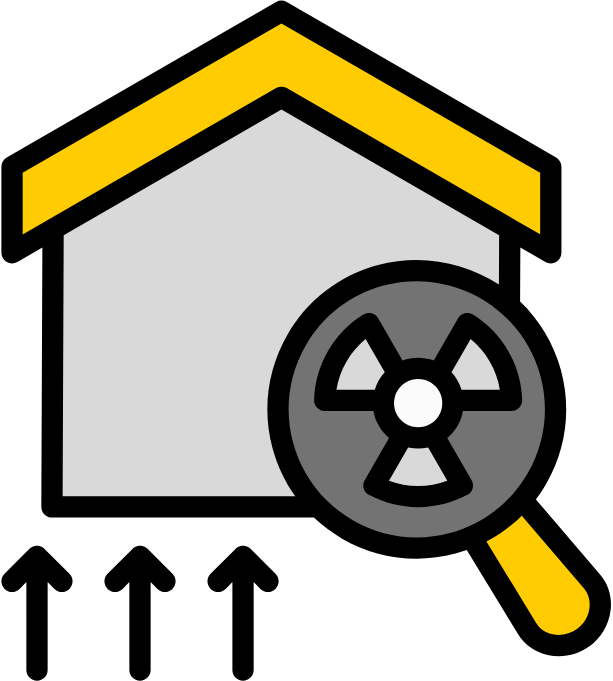
Radon moves from the soil into buildings due to air pressure differences. Common entry points include:
- Cracks in concrete slabs and foundation walls
- Gaps around utility penetrations and plumbing
- Sump pits and drain systems
- Crawl spaces and unfinished basements
- Construction joints and expansion seams
Even well-built, energy-efficient homes can trap radon inside, allowing levels to rise.
What Are Safe Radon Levels?
Radon levels are measured in picocuries per liter of air (pCi/L).
- Below 2.0 pCi/L: Low risk, but monitoring is still recommended
- 2.0–3.9 pCi/L: Consider mitigation
- 4.0 pCi/L or higher: Mitigation strongly recommended
Testing is the only way to know your radon level. Visual inspections or air quality assumptions are not reliable.
How Do You Test for Radon?
Radon testing can be performed using short-term or long-term testing devices placed in the lowest livable area of the building. Professional testing provides accurate readings and proper placement to ensure reliable results.
Testing is recommended:
- Before buying or selling a home
- After renovations or foundation changes
- Every few years, even if past results were low
Can Radon Be Fixed?
Yes. Radon can be reduced effectively with a professionally installed mitigation system. The most common method is sub-slab depressurization, which safely vents radon gas from beneath the home and releases it outside before it enters living spaces.
Properly designed systems can reduce radon levels by up to 99% when installed and maintained correctly.
Protect Your Home and Health
Radon is a serious but manageable indoor air quality issue. With professional testing, proper mitigation, and ongoing system maintenance, you can significantly reduce radon exposure and create a safer indoor environment.
If you have questions about radon levels in your home or want to schedule testing, our team is ready to help with clear answers and proven solutions.